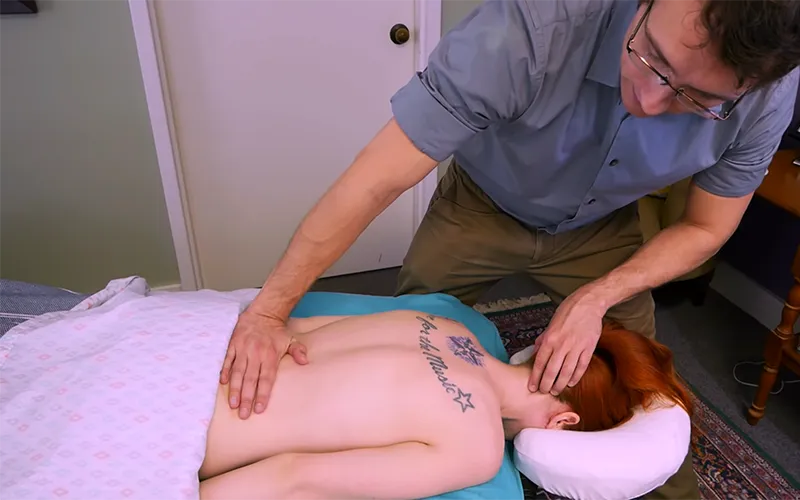
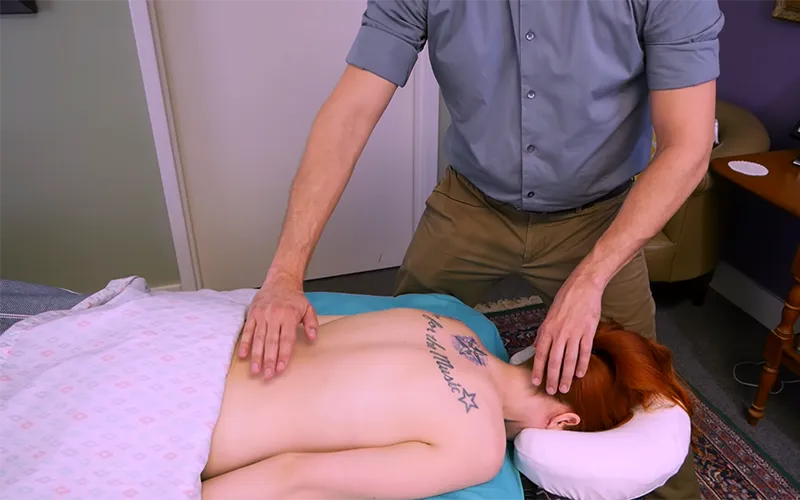
There's a unique feel to myofascial release that doesn't necessarily show up in other styles of massage. It's a sensation that doesn't directly map to being rubbed or compressed or pulled, and that's because it's too deep and wide to describe in those terms. It's like the practitioner is working with your entire body while only making one or two contacts. I usually just call this feeling "myofascial stretch."
What is Myofascial Release, Anyway?
If you're not familiar with myofascial release, there's nothing too mystical about it, and it's easy to incorporate bits and pieces of it into your existing style. The gist is to slow down and angle your pressure toward an edge of the table rather than directly down toward bone. As you do that, forget about working with individual muscles and just take the superficial tissue for a long, slow trip.
Does that sound too easy? Well, there are plenty of other ideas and techniques that can be layered on top of that foundation, depending on the teacher and their philosophy. There might be particular paths to follow, or physical/emotional states to pay attention to. The definition of "release" in myofascial release varies from practitioner to practitioner (but it's not something I focus on too much).
To me, the reason to give this approach a try is because it's profound. By angling your pressure and working broadly, your massage can have far-reaching effects that you might not expect from something that's so easy to do.
An Example: Unspooling the Spine
This is an experiment you can try at the end of any back massage using any modality. Start at the side of the table with a prone client.
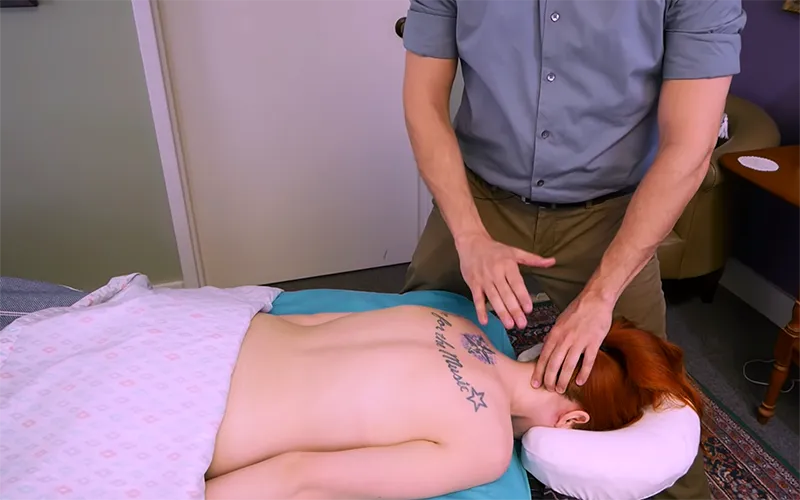
Using fingertips, cradle your client's occipital ridge with one hand. Provide a small amount of traction to the neck by applying gentle pressure in a superior direction.
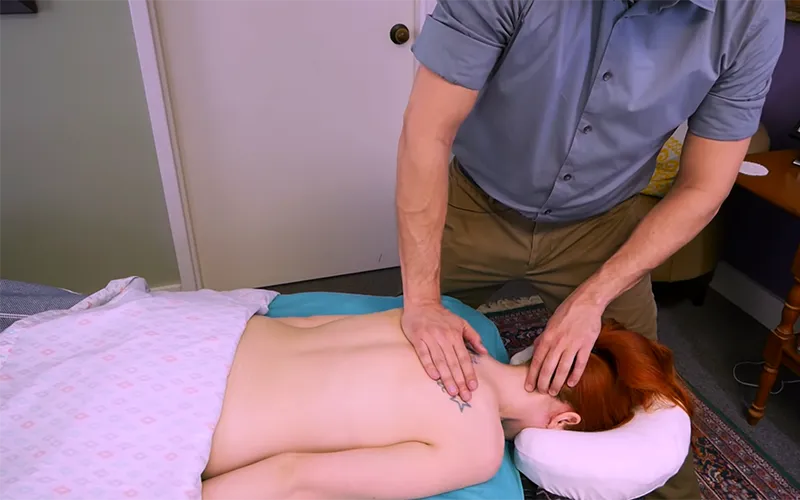
While maintaining the above contact, place the flat palm of your other hand across their upper thoracic spine.
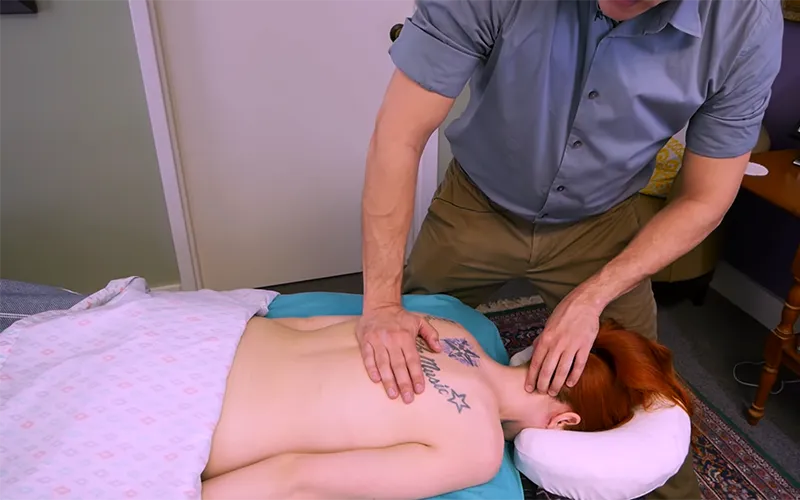
Angle your palmar pressure down toward their feet, allowing the contact to drift inferiorly down the entire length of their spine. Slower is better!
Once your palm reaches the area just superior to the sacrum, allow your hand to come to a stop.
Hold both contacts for 5-10 breaths, maintaining the slight lift to their occiput along with the inferior pressure near their sacrum.
Slowly withdraw your pressure, letting your hands float away over the course of several more breaths.
Step 1. Contact the occiput.Step 2. Apply opposing pressure.Step 3. Let your lower hand drift.Step 4. Stop near L5 and wait.Step 5. Slowly release your pressure.
Ask your client to let you know about any discomfort in their neck or low back as you first try this technique. Reduce your pressure if need be; both contacts should be gentle and supportive rather than sharp. Notice how we're not targeting any specific muscles, and we're also working directly over the spine. Because we're working broadly and angling the pressure obliquely, it is possible to do some new things that don't come up in Swedish massage.
In this case, we're using the superficial fascia to interface with the back on a deep level. By engaging the occiput and dragging tissue away, we're gently distorting the soft tissue of the spine in a way that doesn't happen on a day-to-day basis. By going slowly, we're allowing the client's nervous system time to process this new input.
But really, this isn't about structure. If you ask the recipient, this is about the experience of becoming aware of your spine and how it relates to your breath. It's about someone taking your back in their hands and acknowledging it as a whole rather than breaking it up into pieces.
By angling your pressure and working broadly, your massage can have far-reaching effects that you might not expect from something that's so easy to do.
Feeling Fascial Freedom
Standing up from a long, slow, all-encompassing contact like this is an interesting experience, and it's something that's easy to incorporate at various points during your massage. Find an area of tightness that could use some metaphorical breathing room, make angled contact, and slow down.
Client's posture got them feeling bound up? Apply some long, slow pressure to the pectoral muscles as they externally rotate their shoulder. Low back stiff? Sink some angled pressure into their glute while the other hand presses lumbar tissue superiorly.
If it sounds like I'm telling you to "just experiment and have fun with it," that's because I am! Finding ways to apply myofascial stretch can offer a new experience for you and your clients, allowing you to broaden your perspective from hyper-focused work with muscles and their attachment sites. As long as you stay in good communication with your client and let their experience be your guide, it would be hard to go wrong. Think broadly, give it time, and see what develops.
To understand tissue-tension barriers, MTs must be constantly present and mindful. Too light and we will not become efficient at creating the healing change that is needed.