

In this inaugural episode of Fully Booked, Elicia Crook takes us behind the curtain of her massage journey, shares key differences between massage in Australia and America, and explains why mistakes can be our greatest opportunity for growth.
Connect with Elicia Crook
Website: https://healthleaderco.com/
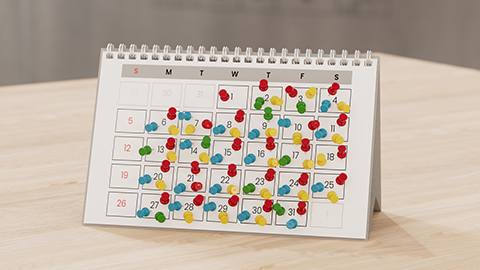
Want more engagement in your social media in 2026? Download your marketing calendar here!
“Building a Thriving Hands-On Practice”, by Elicia Crook, Massage & Bodywork magazine, Spring 2025.
0:00:09.2 Elicia Crook: Hello and welcome. You are listening to Fully Booked with Alicia Crook on the ABMP Podcast Network. I am very excited to be joining you and thank you so much to ABMP and the listener community. I am gonna be your business podcast host for 2026. Now, the first thing you might notice is that I sound a little bit different. I am from Australia and we pronounce... We just love to hang out on our vowels. So we pronounce massage as massage, and I know that in the USA it's often pronounced as massage. So we're gonna have a little bit of a play with that word, a little bit, because you're gonna hear me say that a number of times throughout this year. I am a business coach, I am a remedial massage therapist, and I have been treating for the last 25 years, and I'm really looking forward to sharing some of the passion that I have with you around business and why I believe it's incredibly important for longevity and leadership and also for us to have... Save our hands and really look after ourselves so that we can understand the business side of things so that the hands-on skills that we have is even amplified in the practice that we love.
0:01:23.7 EC: I started back in the year 2000 studying massage. What got me into it was my own literal backstory. When I was 13 years of age, I had some back pain. My mum took me to see a massage therapist who suggested that I might have had scoliosis. She couldn't diagnose anything, but we went off to the doctor, got some X-rays and discovered that I had a 32-degree curvature up the top and 27 degrees down the bottom. What that meant was that my back was already too severe for a back brace and that I was then on the waiting list for surgery. I had major back surgery at 15, and I... To fuse my spine, so I had three half ribs and a full rib removed, five thoracic discs, and fused for 10 vertebrae levels along my spine. This was a four-week process in hospital, and that was really what got me interested in remedial massage because for me, I didn't have any painkillers leading up to the surgery, even though I experienced quite a lot of pain. And the reason I was able to do it without medication was because I believe of the therapy that I had every month leading up to the surgery.
0:02:33.6 EC: It helped me become comfortable in the body that I was in as a 15-year-old who didn't look like her friends. I am located in Ocean Grove and it's a... The name says like it is on the tin. I am from an... A seaside town and a lot of my friends and I would go to the beach and I just didn't look like my friends. And so for me, massage was a really big part of my journey because it helped me feel comfortable in the body that I was in. All of this culminated to get me really curious around how bodywork can help our physical bodies and our mindset and mentality as well. So I left school early and I went and worked full-time at a bakery, so local bakery to be able to save up and pay for my course. I jumped straight in, even though I was only 18 years of age, and I knew that this was what I wanted to do. I'd also grown up in a home where my family members dealt with chronic pain and weren't really cared for incredibly well by the other modalities and practitioners that they saw.
0:03:34.8 EC: They saw physiotherapists, they saw chiropractors, and that was really all we knew of back then. And my grandmother had chronic headaches and my stepdad had low back pain due to driving a lot of trucks and earthmoving machinery. So I was really fascinated when I learned about trigger points and fascia and how our body is all connected, and I'm like... I was thinking of my gran, I'm looking at these trigger point patterns going, oh my gosh, has anyone ever actually pushed on these places and was able to make a difference with their chronic conditions? After seeing my family members not get the support that they really wanted, I was really determined to create a practice where people could experience different types of modalities to see whether it would change or resolve their pain. So I started working from home, just on family and friends, and I charged $25 a session because I couldn't possibly charge more in my socioeconomic area. And I was just studying and I thought, you know what, this is what I'll do, I'll just sort of work a little bit on the side, and someone offered me a room at a chiropractic clinic.
0:04:48.1 EC: So I went and worked in the chiropractic clinic. I was available five days a week and had no clients, basically. And so the chiropractic clinic had been there for a good 25 years in the area, so this was a great place for me to start. It wasn't building up quick enough, so I went and worked at a day spa and supplemented my income. So I ended up working at the day spa five days a week, and then I'd come back and work in my massage clinic two days a week as that was building and then slowly transitioned from one to the other. I also from there met somebody who worked at the snowfields. There is snow in Australia. I worked at Mount Hotham and I worked in the day spa up there in 2004 and just had a really great fun time. To be very honest, we just had a whole heap of fun. We partied hard, we snowboarded hard, and we worked really hard. And it was... That's all there is to do on the mountain, so it was really great fun. And then when I came back, I spoke with the chiropractor and he said, look, if you're gonna do that again, we would see you, and that as you giving up your lease on your clinic. Because my business, while I was gone, I just handed it to a couple of people.
0:05:38.2 EC: No systems, no culture, no expectation, and my business had basically just died. And so I'd built this up for three years and then all of a sudden I had this ultimatum. I could either go back to Hotham and enjoy myself and live this fun life or I'd have to keep hold of my lease and be really serious with my businesses. That's what I heard. I don't think that's what he said, but that's what I heard. And so I was like, okay, I had this decision and I thought, you know what? I'm actually... I'm not gonna renew my lease at this place, but I'm also not gonna go to the snow. And I tried a couple of things that I... I have written articles about this in the ABMP Journal around how I built my practice up. Well, one of the things I tried was, I thought I need to get all my regular clients back in before I moved my clinic.
0:06:34.4 EC: And so I did a deal where I basically sent them a letter. Like a physical, actual handwritten. No, it wasn't, it was typed—letter and posted it, actual paper, stamps, postage. So I posted the letter that said, hey, I'm back from the snow. Would love to see you again. If you book a massage in this month, I'll give you your next massage free. Now, this worked incredibly well because all of my regulars came back. They were really happy to see me. Awesome. Except that I then worked a month for free. That was not such a good thing. The reason it wasn't such a good thing was because I... No one wants to be working for free, right? So for me, I was like, okay, some of this has worked. People came in, so this is good. What else could I do to then build my practice? And so the next letter I sent, or actually gave out to each of my clients who came in, was a referral offer to say, if you tell one of your friends about me, here's a letter. You can use this to invite your friend and I'll give your friend their second massage half price.
0:07:36.9 EC: Yeah. So that... What that means is that I wasn't working for a month for free. All of my regulars were back in, yeah hurrah, and then I was starting to get referral offers. So within about four months from getting back from the snow, I was fully booked. And I thought, now is the best time for me to step out of this practice and move into the practice that I wanted to. So that's exactly what I did. I worked to kind of go, okay, I found a room, I rented it. I was a little bit nervous about going out on my own because I'd been paying contractor rates, so just a percentage, which meant if I had no clients, I didn't have to pay, whereas now I was gonna be paying rent every week. So I went and got myself a job at a gym, a local women's gym, where I would just work there one day a week, and that I knew would cover my rent. So worst case scenario, no clients, I've got rent coming in. Now, I never needed that. To be fair, I never actually needed that for my rent money because I just always had clients coming through.
0:08:29.7 EC: And within 12 months, it took me 12 months to actually notice what I'd done, which was, I'm now fully booked. How cool is that? So it... Things had slowly moved on, I'd slowly grown, I'd get more clients, and there was stuff we were doing, we were putting stuff out there. I was advertising. I didn't have a website yet. This would have been about 2005, so it wasn't quite common for businesses to have websites yet. I am that old. I know I don't look like it in my photos because Photoshop is my friend, and also I just have a young-looking face. It's just one of these things. I don't know, I don't understand it, I just go with it. People are like, what? You don't look that old. I'm 44. I'm a real adult, I promise. And so when I was going into my practice, I started to put myself out there more and more in the community. And I thought, you know what? I think the next step for me is to hire. So I did. I went and I put an ad out, I hired someone, and within 12 months, he had one regular client.
0:09:28.4 EC: Which when I look back on this now, I can tell you that that is just a reflection of my leadership. And the reason I'm telling you all of this is because this is how I became a coach. I didn't become a coach because I woke up one day and was just really good at business. I became a coach because I made a truckload of mistakes and I learned from them and got them right. And so part of what I'm gonna be sharing with you in this podcast is some of my mistakes, some of the things that I didn't do so well so that you can learn from them, so that you don't have to make the same mistakes and live through the same challenges that I did. So this team member, he was only seeing one regular client and I thought, you know what? Let's call it, it's done. And so the next time I went to hire someone, I invited one of my very good colleagues in to just sit on the interview to just be, I just want to make sure that I'm getting this right and that I'm saying this right and that this is the right person.
0:10:16.2 EC: And so she came in and sat in and we hired this absolutely beautiful therapist who I'm still actually colleagues with now. She worked with me for a long time, almost 10 years, and she went off to have babies. And her babies are now nearly teenagers, and we still catch up regularly, and... Which I really appreciate and respect. And she has offered to me to be... Asked me to be a reference for her and things like that. So I love that some of the connections that I've had have been lifelong, which is powerful. We then hired one of her friends, so one of the people that she went to school with. Then we hired another person who they went to school with, and the four of us really started to get a lot of traction in our industry. We also had another lady working with us. So in the end, we had five of us working out of one treatment room. We did split shifts, which meant we did 8:00 in the morning till 2:00 and then we'd do sort of 2:30 till 8:00 p.m., and that worked really well for all of us.
0:11:10.4 EC: Because some of us had kids and so they could drop off kids or pick them up from school, and it was working really well. We... It was too busy. Like, in one treatment room, it was too busy. So we ended up... We needed to move out of there and we moved into a space where we had three treatment rooms and a reception area. And we collaborated with an osteopath, a naturopath, a life coach. And we brought on board another couple of team members as well. And so at one point we had a number of contractors working in my clinic, and one of the differences between here and the USA is that in Australia, there's a real big push to ensure that if people's contract looks like employment, sounds like employment, feels like employment, then it should be deemed employment. And we had to make a big change and basically take everyone from contractor and move them into employees. I lost five team members in three weeks due to that change because they didn't love the changes that was happening. And look, honestly what I've learned over the years is that people don't like change. When I moved my practice from that location to... Into this location that I'm talking about now, we literally moved across the road and people stopped coming because, heck, they didn't want to have to. They didn't like change.
0:12:21.8 EC: Yeah. So changing that, let alone starting to change people's pay structure, was quite big. I would do it entirely differently again if I ever had the chance. And I'm going to unpack a bunch of this story with you. I just wanted to give you the overview of what it's like and how my brain works. I do talk pretty quickly, so I hope you haven't got me on 1.5 speed because otherwise you might ____, unless your brain functions really fast like mine does, and you're going to love it. You can slow me down if you need to. So yeah, I had a bunch of team members working with us and then we transitioned into employment and I hired five brand new therapists and I had them completely fully booked and rebooking at an 85% capacity within 12 weeks. And the reason I sort of highlight this is because if we look back to my first hire, which was 11 years prior and one regular client, fast forward to 11 years and a bunch of training and learning and what had happened to be able to completely book out five team members in a three month period, there was a lot of growth, there was a lot of action, there was a lot of coach, intentional culture we created. And some of the things that we did is what I will share with you. Some of the learnings that I've had is what I'm going to be sharing in this podcast throughout this year.
0:13:43.0 EC: In this particular season, I had some business coaching. I really loved it. I loved learning about self-development, I loved learning about how our brain works, I loved learning about marketing, I loved learning about systems and money, and just so much of it blew my mind because I'd had so much experience and yet there was so much I didn't know about the business side of things when it became really intentional. And so for me, business coaching was really profound and helped us to be able to establish and create that successful milestone that I was just sharing. And when I had kind of... I had done all of that and I was like, what next? Now what? I'm fully booked, my team's fully booked, everything's humming along. Now what do I do? And I thought, you know what, someone needs to be teaching this to the massage industry. And at the time in Australia, there wasn't any business coaches specifically for the massage industry. And I thought, well, if no one else is going to do it, I will. So I went and enrolled in a program called NLP, Neuro-Linguistic Programming, to learn how the patterns of how our brain works and how we are wired.
0:14:47.5 EC: Because if we understand how to work with our brain, I believe we can understand how to have success in any area of our life that we desire, and I wanted to... I desired to have success in my massage business, and so I started to scale back my massage business and step into the coaching. That became so popular that in 2016 I left my business, I sold my practice, and stepped directly into coaching, and I have been coaching ever since. So this is my 10th year as a business coach in the massage industry. I am one of the founders of The Health Leader Co., and together with Christine Knox, who is my business partner, and James Crook, who is my business partner and life partner, we together help the massage industry through coaching and training in business and hands-on modalities. So you'll also be hearing a little bit from them as I interview them in the podcast as well. I believe that business skills are really important because they protect your hands, your energy, and your future. Having confidence in business creates better client outcomes. Financial stability allows better care and boundaries, and business is not the enemy of heart-led work.
0:16:04.5 EC: I believe that business is the key to making a successful practitioner stay in the industry longer. In my experience, people don't leave the industry because they are burnt out, or perhaps another way of saying that, I rarely see therapists get burnt out when their business is successful. So what I believe is that when we make our business successful, we have profitability, we have great boundaries, we're able to say yes to the things we want, no to the things we don't want, yes to the people we want to work with, no to the people we don't want to work with. It actually allows us to have a greater level of freedom and really create a practice that we love. Now, some differences between massage in Australia and massage in the USA is that in the USA you guys have state-based licensing and requirements... Various requirements state by state. In Australia, we have a national qualification system. So what that means is that we have three main levels of qualification. We have a Cert IV, which is usually six to 12 months, which is relaxation therapeutic massage. We have a Diploma of Remedial Massage that can be anywhere from one to two years of training, and Myotherapy, which is usually an extra year of training and often includes dry needling.
0:17:22.1 EC: I'm in the middle there. I'm a remedial massage therapist. Remedy meaning what we fix, and what do we fix? Muscles. And I have also additionally added in to my skill set a bunch of other things. So I practice Bowen therapy, which was developed here in Geelong by a man named Tom Bowen in the late 70s and the early 80s. I'll talk a bit about that in this podcast as well. I also practice craniosacral therapy, gentle scar therapy, remedial hot stones. I practice NLP and I love to combine everything I've ever learned into my treatments. So that's how I work, and I've always worked with complicated cases. In Australia we have five main massage modality associations, of which I am, I do a lot of work with one in particular and have the privilege of working alongside a couple of the others as well. Some fun facts, a little bit about Australia. We only have 80 Starbucks in the entire country. The reason we only have 80 Starbucks in our entire country is because we have a really strong local coffee culture, especially in Melbourne. I'm about an hour and a half south of Melbourne. We pronounce it Melbourne, by the way.
0:18:32.3 EC: I know it sounds like there should be an A in there, but it's not, and often we hear people say Mel-born. We call it Melbourne and really just just hang out on those vowels. Melbourne arguably has the best coffee culture in the world. I know, but it's backed by me and 5.3 million people who live in Melbourne. Okay, so we have a sister city in New Jersey also called Ocean Grove, and we are named after that town. Ocean Grove was based as a Methodist town for a long time and we did not have any sale of alcohol, and it wasn't until the mid or late 1990s where that was removed and now you can buy alcohol in our town. In fact, the only pub was called the Collendina Pub and it was called Collendina because it was the only way they could get the name change. It was like on the outskirts of the town and if people say, oh yeah, I'm from Collendina, or, oh, you live in Collendina, it's like, it's not a separate postcode. It was just a separate area of Ocean Grove that was named that way so that they could have a pub in there. When I was running my practice, Ocean Grove had a population of around 13,000 people.
0:19:39.5 EC: And now we have about 15 and a half thousand, and interestingly enough, we had 35 other massage practitioners within a two and a half to five mile radius. What that meant was in our town there were 35 other practitioners and four other allied health clinics from where I practiced as well. So this was a really high-trafficked and high-demand area for allied health, allied and complementary health. One of the things that we were really lucky with when it came to running our practice was that websites, and websites being mobile responsive, became really popular. Now my husband and business partner was a digital marketer at the same time and while I did all of the marketing for my clinic, he also taught me a lot about marketing, which I utilize today and utilized a lot in my practice. Social media was a really big part of our journey. It was when Facebook became very, very popular. And I believe, I know crazy in this world we're living in, but I genuinely believe that Facebook is a fantastic platform for us to market our businesses. More on that in this podcast. We became really well known in our community and part of that was through our social media following.
0:20:57.6 EC: I learned a lot. One of the things that we trialed was what would happen if we posted three times a day. Would people switch off or comment more or what would happen? And what we noticed was a huge increase in engagement. Now we had a really big clinic and we needed a lot of new clients coming in every week, and we attracted about 17 new clients a week. And with an 85% rebooking rate across the team, we were seeing over 100 clients in our space and we were the most expensive clinic in the area. So for us, social media was a really big part of that. So something that we have put together here at The Health Leader Co., is a social media calendar download that we're going to pop in the show notes. We created it so that you could create some consistency without overwhelm. It's going to save you time and it's designed specifically for massage and bodywork businesses. It'll help you immediately because it has all the special days throughout the year for both Australia and in the USA, and we've also got access to some social media posting images that we've done through Canva as well as Dropbox and some articles and things like that as well.
0:22:04.9 EC: So we'll pop a link to the show notes in there. You are welcome to download the calendar for free and it really is to just save you time and help that consistency without the overwhelm. Caveat to that is nobody needs to be posting three times a day. That was a very old strategy that we were just having a good crack at to see if it would work or not. And so, yeah, we just wanted to share that with you and just let you know that this is just really, if we can be posting a few times a week, it'll help you be consistent and help your message get heard. And there's some really specific and wonderful ways that we can utilize social media that we will discuss in our time together. Thank you so much for listening to this first episode with me. I'm so excited to be here. My name is Alicia Crook and please remember to subscribe to the ABMP podcast wherever you listen to podcasts.