

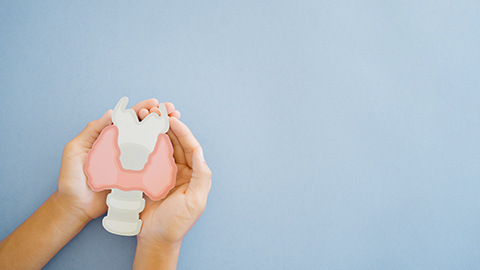
Ruth is learning, writing, and teaching about thyroid disease in lots of different places, so IHACW is coming along for the ride.
Hypothyroidism: the thyroid gland doesn’t produce enough of the right hormones to stimulate healthy metabolism—a person has a hard time turning fuel (that’s oxygen and food) into energy. The result: lethargy, weight gain, sluggish digestion, and lots, lots more. Does this describe any of your clients?
But treating endocrine diseases is a tricky business. In this episode Ruth interviews a friend who had some success, but it is an ongoing battle.
Resources:
Dive in deeper with Ruth Werner's column exploring working with clients with hypothyroidism here!
Allen, E. and Fingeret, A. (2025) “Anatomy, Head and Neck, Thyroid,” in StatPearls. Treasure Island (FL): StatPearls Publishing. Available at: http://www.ncbi.nlm.nih.gov/books/NBK470452/ (Accessed: January 1, 2026).
Elshimy, G. et al. (2025) “Myxedema Coma,” in StatPearls. Treasure Island (FL): StatPearls Publishing. Available at: http://www.ncbi.nlm.nih.gov/books/NBK545193/ (Accessed: January 8, 2026).
Lu, M. et al. (2025) “Therapeutic benefits of acupoint massage at Yuji (LU10) and Zhaohai (KI6) for postoperative hoarseness in thyroid surgery patients,” BMC surgery, 25(1), p. 148. Available at: https://doi.org/10.1186/s12893-025-02889-7.
Rosen, J.E. et al. (2013) “Complementary and alternative medicine use among patients with thyroid cancer,” Thyroid: Official Journal of the American Thyroid Association, 23(10), pp. 1238–1246. Available at: https://doi.org/10.1089/thy.2012.0495.
Tachi, J., Amino, N. and Miyai, K. (1990) “Massage therapy on neck: a contributing factor for destructive thyrotoxicosis?,” Thyroidology, 2(1), pp. 25–27.
Thyroid Nodules: Causes, Symptoms & Treatment (no date) Cleveland Clinic. Available at: https://my.clevelandclinic.org/health/diseases/13121-thyroid-nodule (Accessed: January 8, 2026).
Thyroid: What It Is, Function & Problems (no date). Available at: https://my.clevelandclinic.org/health/body/23188-thyroid (Accessed: January 1, 2026).
Wyne, K.L. et al. (2023) “Hypothyroidism Prevalence in the United States: A Retrospective Study Combining National Health and Nutrition Examination Survey and Claims Data, 2009–2019,” Journal of the Endocrine Society, 7(1), p. bvac172. Available at: https://doi.org/10.1210/jendso/bvac172.
Anatomy Trains is a global leader in online anatomy education and also provides in-classroom certification programs for structural integration in the US, Canada, Australia, Europe, Japan, and China, as well as fresh-tissue cadaver dissection labs and weekend courses. The work of Anatomy Trains originated with founder Tom Myers, who mapped the human body into 13 myofascial meridians in his original book, currently in its fourth edition and translated into 12 languages. The principles of Anatomy Trains are used by osteopaths, physical therapists, bodyworkers, massage therapists, personal trainers, yoga, Pilates, Gyrotonics, and other body-minded manual therapists and movement professionals. Anatomy Trains inspires these practitioners to work with holistic anatomy in treating system-wide patterns to provide improved client outcomes in terms of structure and function.
Website: anatomytrains.com
Email: info@anatomytrains.com
Facebook: facebook.com/AnatomyTrains
Instagram: www.instagram.com/anatomytrainsofficial
YouTube: https://www.youtube.com/channel/UC2g6TOEFrX4b-CigknssKHA
Precision Neuromuscular Therapy seminars (www.pnmt.org) have been teaching high-quality seminars for more than 20 years. Doug Nelson and the PNMT teaching staff help you to practice with the confidence and creativity that comes from deep understanding, rather than the adherence to one treatment approach or technique.
Find our seminar schedule at pnmt.org/seminar-schedule with over 60 weekends of seminars across the country.
Or meet us online in the PNMT Portal, our online gateway with access to over 500 videos, 37 NCBTMB CEs, our Discovery Series webinars, one-on-one mentoring, and much, much more! All for the low yearly cost of $167.50. Learn more at pnmt.thinkific.com/courses/pnmtportal!
Follow us on social media: @precisionnmt on Instagram or at Precision Neuromuscular Therapy Seminars on Facebook.
Heights Wellness Retreat is redefining whole-body wellness through an innovative, integrated approach to physical, mental, and emotional well-being. Built on more than two decades of Massage Heights expertise in massage and skin therapy, this next-generation wellness destination represents the evolution of our mission to transform lives through wellness.
At Heights Wellness Retreat, we believe every person is an unstoppable force, whether navigating daily demands, pursuing goals, or striving to be their best. This drives everything we do. We go beyond traditional spa services by creating a purpose-driven environment where wellness professionals are empowered, valued, and positioned to grow. With steady clientele, support, and a wellness-forward culture, Heights Wellness Retreat is where therapists build meaningful, sustainable careers while shaping the future of the wellness industry.
www.massageheightscareers.careerplug.com/jobs
www.heightswellnessretreats.com
https://www.instagram.com/heightswellnessretreat/
https://www.facebook.com/heightswellnessretreat/
0:00:00.3 Speaker 1: Elevate your bodywork career with Anatomy Train's Structural Integration certification, ATSI. Discover how to map the pattern and shape the change through inspiring lectures, hands-on body reading, and practical techniques you can use in your practice right away. Join us for ATSI Maine 2026 to 2027, where Tom Myers will personally kick off this transformative professional training. Learn more at anatomytrains.com/atsi. At Heights Retreats, massage therapists build stable and meaningful careers rooted in wellness and care. A place where therapists are dedicated to delivering exceptional care to the guests, not to filling their schedule. Heights Retreats care deeply about their therapists, our profession, and wellness itself. Grow with Heights as they evolve into a wellness-driven future. Visit heightswellnessretreat.com for more information.
[music]
0:01:19.1 Ruth Warner: Hi and welcome to I Have a Client Who: Pathology Conversations with Ruth Warner, the podcast where I will discuss your real-life stories about clients with conditions that are perplexing or confusing. I'm Ruth Warner, author of 'A Massage Therapist's Guide to Pathology', and I have spent decades studying, writing about, and teaching about where massage therapy intersects with diseases and conditions that might limit our clients' health. We almost always have something good to offer, even with our most challenged clients, but we need to figure out a way to do that safely, effectively, and within our scope of practice. And sometimes, as we have all learned, that is harder than it looks. Dear listeners, do you ever say yes to too many opportunities? I have no idea what that's like. That never ever happens to me, except for right now when I am working on several different projects and they all have the very highest priority.
0:02:26.4 RW: Fortunately, I have some choices about the content of these projects, and to make the best use of my time, I have been learning about and writing about and teaching about thyroid disease in just about every part of my professional life. So I'm gonna use this opportunity also with I Have a Client Who to make my life just a little bit simpler and to make the focus of this episode a person who lives with hypothyroidism. I'm very glad to say that for this episode and also for my upcoming Massage & Bodywork article, I had the opportunity to interview a friend and colleague who lives with this condition. I'm gonna share excerpts of that interview with you, but I wanted to provide a few introductory remarks just to set the stage. So hypothyroidism is a situation where the thyroid gland, which is in front of the throat, doesn't produce enough hormone to meet a person's needs. The hormones we're really interested in for this discussion are T3, which is also called triiodothyronine, and T4, which is also called thyroxine.
0:03:39.3 RW: Under normal circumstances, the hypothalamus and the pituitary in the brain, they work together. They send a message to the thyroid gland. That message is called thyroid-stimulating hormone, or TSH. And TSH tells the thyroid to release T3 and T4. Well, it turns out that T3 is more biologically available than T4. So the thyroid spits out both. But then the T4 is converted into T3 by the liver. Now, other tissues do this too, but the liver is the main place that this happens. Now we have T3 and T4 circulating through the body. The T4 is being converted into T3, and between them now we have chemical messages, hormonal messages that promote the transference of fuel, which is to say oxygen and food, into energy and work. If we don't produce adequate amounts of T3 and T4, then any incoming nutrition is going to be converted not into energy, but into storage in fat cells. And of course, that's what happens with hypothyroidism. For most people, mostly females, mostly mature, and for reasons that are not always clear, the thyroid produces less and less and less hormone. And the consequences of this are very wide ranging.
0:05:11.9 RW: But the main one is that people who have hypothyroidism have a really hard time converting food into energy. And it doesn't matter what they eat. It could be the most perfect diet ever, and it all still goes into storage and not into energy. Meanwhile, that person feels cold all the time. They have no zip, they're terribly fatigued, their digestion is really slow, they have constipation and heavy periods and their hair gets brittle and their cholesterol levels go up. And these are all signs and symptoms of hypothyroidism. One of the things that's really frustrating about hypothyroidism is that it looks like lots of other things, including depression and fibromyalgia and perimenopause and lots of other things, and of course, there's no reason a person can't have all of this happening in any combination and all at the same time. Combine that with the fact that hypothyroidism is only identified by looking at the circulating levels of thyroid-stimulating hormone, and we work off a model that suggests that every person should have the same parameters of circulating thyroid hormone.
0:06:28.4 RW: Frankly, that's probably not a realistic expectation, because my optimal parameters for thyroid-stimulating hormone and then T3 and T4 probably look different from yours. But at this point in our understanding of the endocrinology of thyroid issues, we're just not great at recognizing these nuances. Now, there are definitely specific diseases that cause hypothyroidism, and the most common one is called Hashimoto's thyroiditis. That's an autoimmune disease. It interferes with thyroid function. Thyroid circulating levels of thyroid hormone go very low and the thyroid becomes enlarged. And of course, we call that a goiter. People can also develop cysts or nodules on their thyroid, and these can interfere with T3 and T4 production, or they can rev it up, and that's even more dangerous. There's even a specific kind of birth defect where a child is born with only a partial or not fully functional thyroid gland. And there are a few other circumstances where the thyroid just can't keep up with a person's needs. But for many, many people, they have lots of the signs and symptoms of hypothyroidism, but they may or may not meet the numbers on the diagnostic criteria. This is sometimes called idiopathic or subclinical hypothyroidism. And lots of times these folks don't get treatment. And this is where things get tricky.
0:08:03.7 RW: So in the interview I'm gonna share with you, you will hear about a person who finds a treatment that works so great for them, and her response is fabulously wonderful. And it makes me want to run out and see if I can get some of this hormone too. But I want to emphasize it is not safe to try to self-medicate for this. Having an overactive thyroid is much more dangerous than having an underactive thyroid, and we need to keep that in mind. The typical treatment for hypothyroidism is a synthetic form of T4 called Synthroid. But there are some other brand names as well. As you will hear in our interview, that's not always successful for people who have hypothyroidism. Messing around with our hormones is a very, very tricky business. And we're in a position to be supportive for our clients, but not to interfere in their relationships with their prescribing physicians. I'd love for us to encourage people to keep the goal of feeling their very best selves, but to do that under the guidance of a skilled and trusted healthcare provider. And with that, I would now love for you to meet my good friend, Maria Cooper. I am thrilled to introduce an old friend, which is not to say aged, but a friend who goes back with me over many years and colleague who is a massage therapist also, I think a teacher, right?
0:09:36.2 Maria Cooper: I was a teacher, yes. Full-time ____
0:09:39.0 RW: All right, very good. Maria Cooper. Maria has a history with thyroid disease. And so she has very generously offered to share some of that information. Before we get into that, Maria, would you like to just introduce yourself, tell us anything that you feel it would be useful for people to know about you?
0:09:58.9 MC: I'm Mexican American, and everyone in my family has had high cholesterol, but none of us have died of heart disease or diabetes. And I believe that many times because I have had high cholesterol that my thyroid concerns have not been taken seriously because doctors focus on the high cholesterol and not my actual health.
0:10:24.8 RW: Boy, that's a complicated topic because high cholesterol is a risk factor, but not all of the risk factors for heart disease. And of course, one of the things we know that is under-addressed is that high cholesterol in females means something a little different from high cholesterol in males. So much of what I've been learning about thyroid disease in general, but hypothyroidism in particular, is because this is overwhelmingly something that happens in women. I can't say because, but it is an interesting correlation that something that happens overwhelmingly more often in women tends to be under-addressed in the medical community. So, all right, so you come from a family background where high cholesterol is a thing and yet heart disease is not a thing in your family. Tell us about what first led you to wonder whether your thyroid was fully functional.
0:11:22.6 MC: Just that as a young woman, I was... Well, I'm five foot two and when I was young, my weight fluctuated between 126 pounds to 135 pounds. And I was always tired. Till I was in my 43rd year, I happened to meet a naturopathic physician, Dr. Lisa Holk, who still practices here in the Chicago area. And she did blood work and basically said, "Your thyroid is very low and let's do something about that." So I started on Armour Thyroid, which all of a sudden I had energy. I had energy! And it was like going from being half asleep to being wide awake. And it just made a huge difference in my outlook, in my brain function. It was amazing. Yes, Armour Thyroid, like a miracle drug. And that was great. Eventually I had to go back to my regular GP, who was loath to consider keeping me on the Armour Thyroid, desperately wanted to put me on Synthroid. So to appease him, I tried Synthroid and I started swelling up like a balloon. I had to literally beg to go back on the Armour Thyroid. And lo and behold, I got my energy back. Although it is still a battle every time I go in for my annual wellness to remain on it.
0:13:04.5 RW: What about your cholesterol and other heart disease risk things? Has that changed?
0:13:10.3 MC: This year I had the calcium scan that they do and my results were 0, 0, and 0.5, which is pretty damn good considering I still have high cholesterol. But it's not an issue for me because again, I work full-time at a demanding job. I'm the administrative assistant in an engineering department for the city. And I have to use the little gray cells because I work with spreadsheets, which I never thought I would do, coming from being a massage therapist to working with paper and numbers. But God bless thyroid medicine because otherwise I don't think I could still be active and enjoying my life and working and doing everything a person wants and needs to do without it.
0:14:03.4 RW: Right. Has your prescription of your Armour changed over time?
0:14:10.4 MC: Yes, it has. It went from 60 milligrams to 90.
0:14:16.5 RW: That's consistent with what we know about hypothyroidism, which is that it is progressive. I'm curious to know if you would be willing to share your experiences with dealing with hypothyroidism at the same time as going through perimenopause.
0:14:33.4 MC: Certainly. I was extremely fortunate. And again, it's genetics. I'm convinced it's genetics. I had no hot flashes at all, ever. I did have insomnia and again, fatigue, occasional fatigue. But other than that, it was smooth. It was a very smooth transition for me.
0:14:58.9 RW: Well, so this is gonna make everybody listening to this conversation wanna run to their doctor and demand Armour, because the uptake of Armour can be a little inconsistent. I think that's one reason that endocrinologists are reluctant to fall back on it. What happens is the liver converts T4 into T3, and that happens naturally with our thyroid gland. It also happens when we supplement Synthroid. That's T4. Our liver is the main organ that converts it into T3, which is more biologically available. So sometimes someone who's not a good converter, someone who isn't great at turning T4 into T3, might be recommended to use Cytomel or Armour. And often that's associated with a history of some kind of liver dysfunction. So I'm intrigued that your naturopath kind of skipped to the chase and went right to Armour.
0:15:55.6 RW: Another thing I want to say, 'cause I looked this up too. I am a postmenopausal woman. I've dealt with the typical menopausal fatigue and sleep disorders and weight gain and all those things, and I've often been tempted to maybe see if I could get my hands on some thyroid supplementation just to see if that would move the needle for my experiences. And I want to encourage our listeners not to do that. Don't do that. Don't do that. Supplementing thyroid hormones when your thyroid is not low is really bad for you and can lead to complications like arrhythmia and other kinds of heart problems and cardiovascular issues. So even though it sounds awesome and it worked great for you and I'm really happy about that, it is not something to dabble with. We don't just go to our pig supplier and say, "Hey, can you get me some pig thyroid under the table?" That would be a really, really bad idea. What would you like for massage therapists to know? What other kinds of insights do you think would be particularly valuable for our listeners who have clients who have hypothyroidism?
0:17:12.1 MC: Well, just check in. Check in and really focus on the tissue. Okay. If you feel something odd, talk about it. Say, "This muscle on this side feels different than this on the other side. Do you feel a difference? What do you think the difference could be?" Draw people out. And if we're gonna work as a team, be a partner and communicate with me.
0:17:41.5 RW: Well, Maria, thank you for those important reminders. Thank you so much for sharing your story with us and also for validating everything that I've been learning about not only hypothyroidism, but hypothyroidism management. And it's not something that massage therapists are in a position to give advice about. We're not. What we can do is if someone is unhappy with the way that their body is responding to recommended medication is to encourage people to go back to their doctors and discuss it further. I appreciate your taking some time to be with us, and I will hopefully see you again sometime in the future.
0:18:20.5 MC: I would love that.
0:18:28.0 S1: Precision Neuromuscular Therapy has been teaching high-quality seminars for over 20 years across the country. Founded by Doug Nelson, PNMT uses problem-solving skills and precise treatment options to get powerful results for your clients. PNMT seminars focus on honing your assessment and palpation skills to precisely target the source of your client's pain while understanding the why behind the what. Meet us in a hands-on seminar or online in the PNMT portal and let us join you on your learning journey. Learn more at pnmt.org.