

Fascia: The Pericardium-Diaphragm Connection
Understanding how the pericardium relates to breathing can in turn help clients relax into their massage session.
The sartorius is a long, slender muscle located superficially on the anterior thigh. It is located directly over the top of the rectus femoris, adductor longus, and vastus medialis muscles. Moving from proximal to distal, this muscle traverses the thigh from a central point on the anterior superior iliac crest (ASIS) medially and distally to the medial portion of the knee. This gives the sartorius a distinctive curved shape as it winds around the front and inside of the thigh.
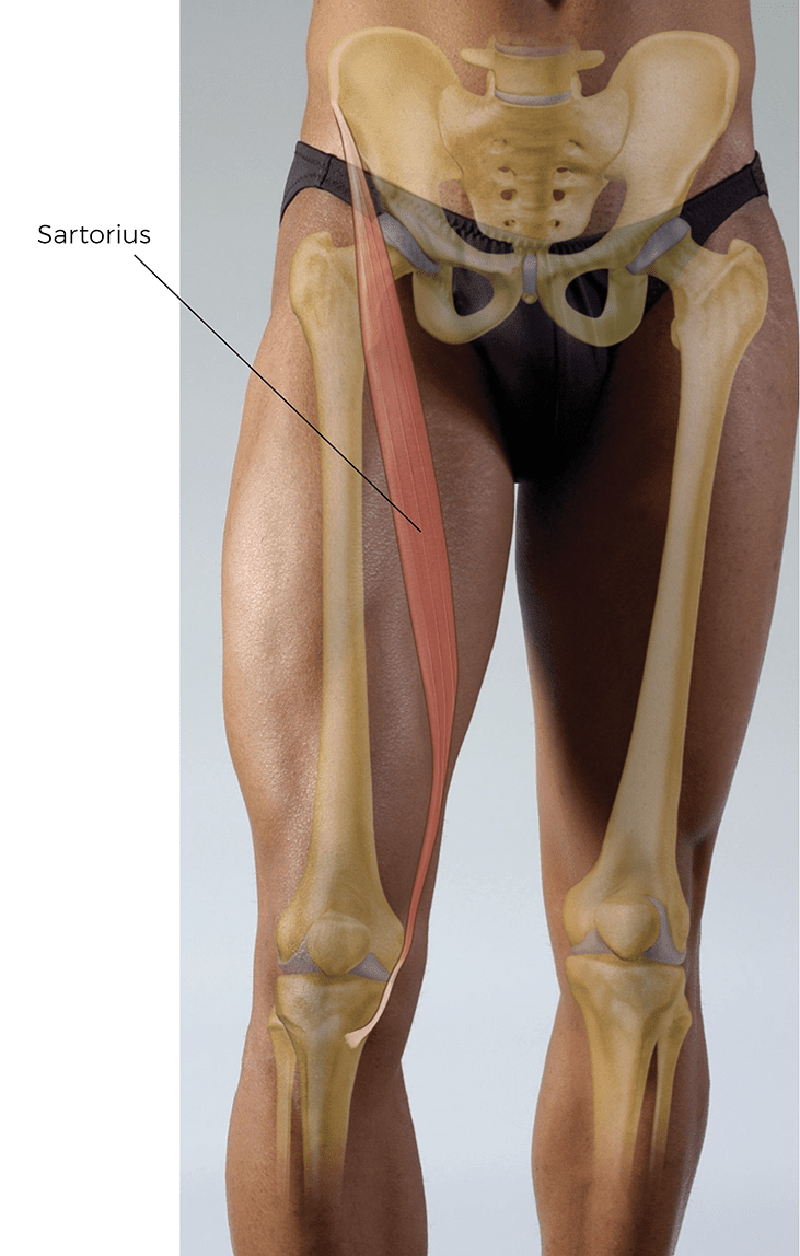
Often referred to as the “tailor’s muscle,” it is so named for the cross-legged working position used in that profession in which the ankle of one leg rests on top of the knee of the other leg. Achieving this position uses the actions of the sartorius, where the hip flexes, abducts, and externally rotates while the knee flexes to 90 degrees.
Along with the tensor fasciae latae muscle, the sartorius forms an upside down “V” on the front of the thigh. Both muscles cross the hip and knee and work synergistically to flex and abduct the hip. They also work antagonistically, rotating the hip in opposite directions, with the sartorius rotating externally and the tensor fasciae latae rotating internally. This relationship provides control in rotational movements of the hip and knee, such as when planting and pivoting the lower extremity.
The sartorius joins the gracilis and semitendinosus muscles at a common insertion at the pes anserinus. The pes anserinus means “goose foot” and is named for its three-pronged shape. The three muscles converge at the inside of the knee and insert on the medial shaft of the tibia. The sartorius descends from the front, the gracilis from the middle, and the semitendinosus from the back of the thigh. Together they form a tripod of dynamic stabilizers for the medial knee.
Ligament injuries to the underlying medial collateral ligament are very common, particularly when these three muscles are weak compared to the lateral stabilizers of the knee. Excessive tension in the iliotibial band and vastus lateralis muscle may also stress the pes anserinus, leading to generalized medial knee pain, specific trigger points, and eventual problems with patellofemoral tracking.
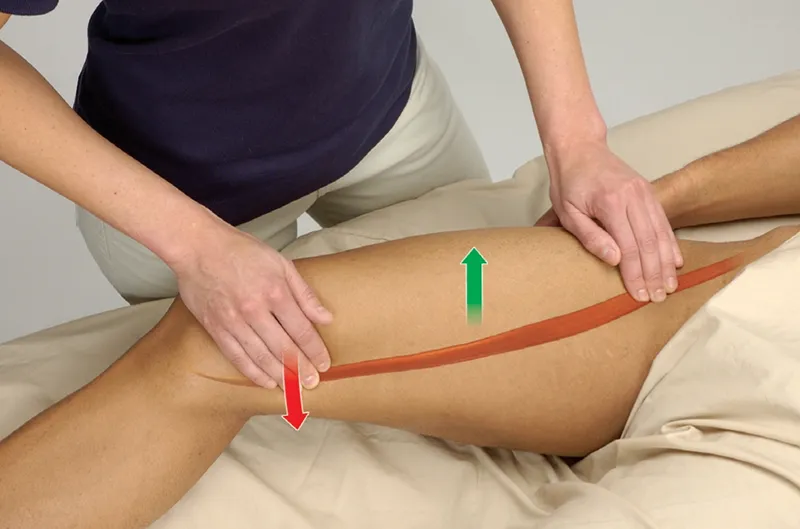
Positioning: client supine with hip externally rotated and knee flexed.
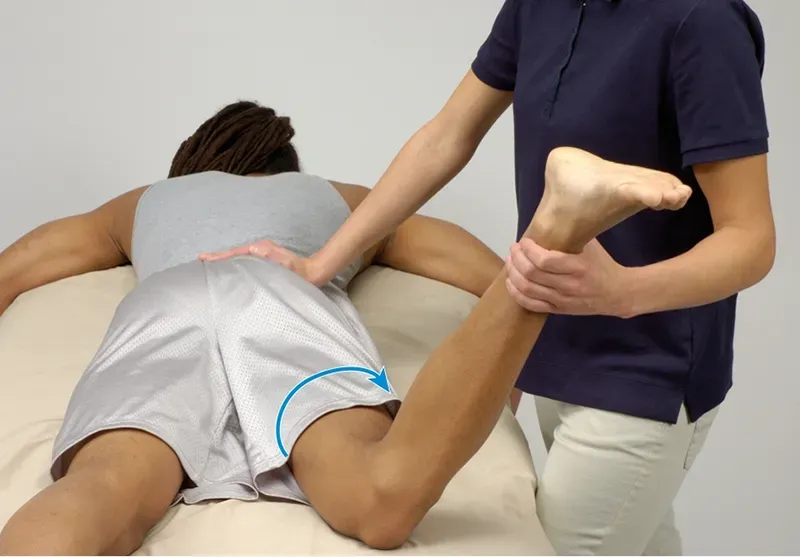
Positioning: client prone with knee flexed.
Understanding how the pericardium relates to breathing can in turn help clients relax into their massage session.
Superficial fascia may not get the same attention as deep fascia, but it plays an extremely important role in the organization of tissues and the structure of the body.
Understanding tendons—their shapes, lengths, and organization—improves an MT’s touch vocabulary and facilitates a more skilled touch.
While the neck is a bridge, a pathway, the position of the neck and head can also indicate a multitude of other things happening beneath the surface.